


Why many successful owners struggle after they exit.
For years, the business has been part of your identity.
It’s where your time goes.
Your energy.
Your attention.
Your purpose.
Your relationships.
Your sense of contribution.
So when business owners start thinking about eventually stepping away, the conversation often focuses almost entirely on the financial side:
- valuation
- taxes
- investments
- income planning
- timing
And while those things matter, they’re not the whole story.
Because one of the most overlooked parts of exit planning is this:
Who are you going to be when the business no longer needs you the same way?
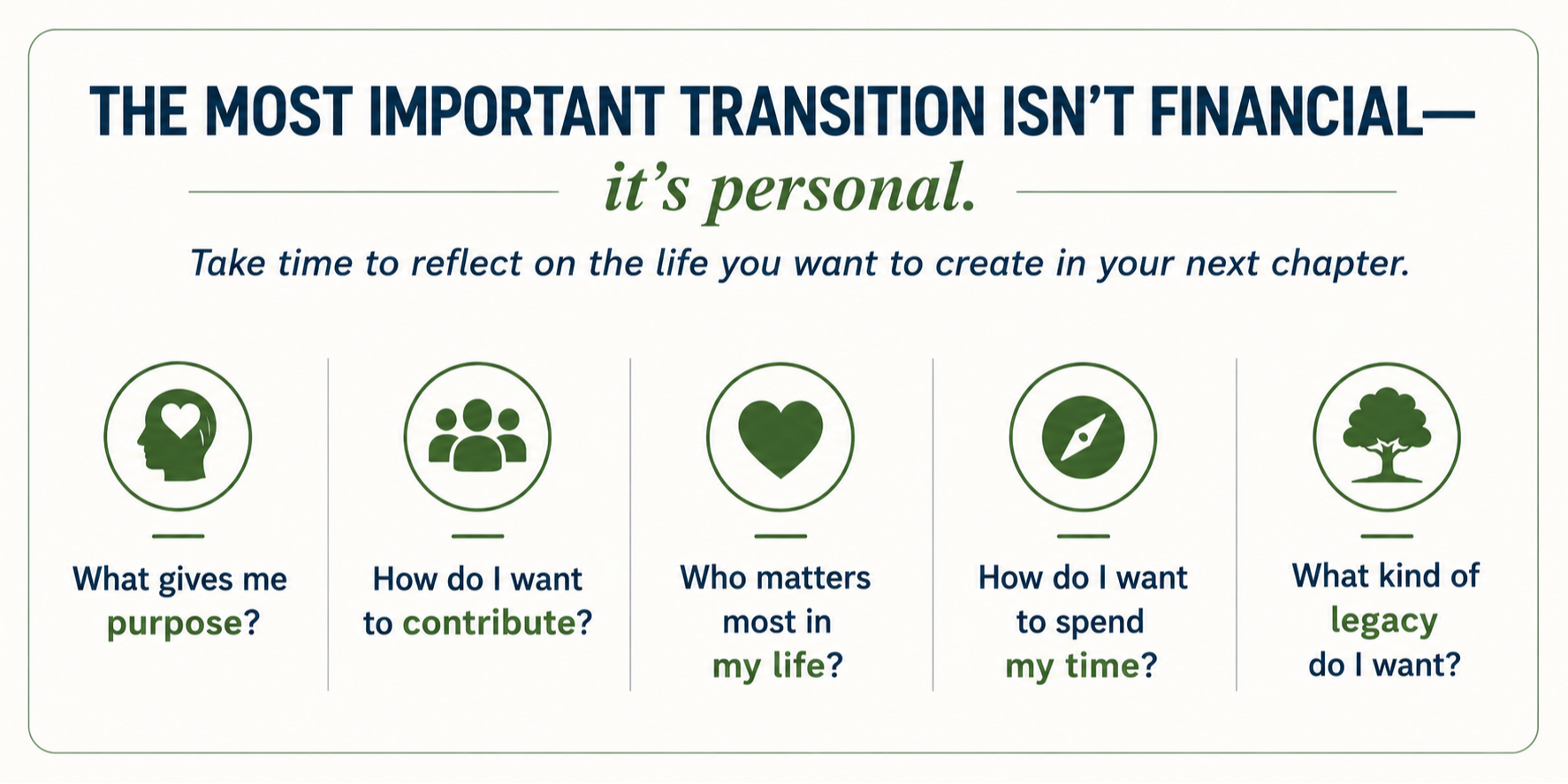
Why some owners struggle after the exit
I’ve seen situations where owners achieve what they thought was the goal:
- the deal closes
- the money hits the account
- the pressure decreases
…but several months later, something still feels off.
Not because they made a bad financial decision.
But because they underestimated how much of their identity was connected to the business itself.
For many owners, work has provided:
- structure
- challenge
- relationships
- influence
- significance
And when that suddenly changes, it can create an unexpected sense of loss or disorientation.
This is bigger than retirement
That’s why I believe good exit planning isn’t just about preparing the business financially.
It’s about preparing the owner personally.
Questions like:
- What do I want life to look like afterward?
- What will give me purpose?
- How do I want to spend my time?
- What role will family, faith, mentoring, or contribution play?
Those questions matter more than most owners realize.
Because eventually, every owner transitions from building wealth… to deciding what that wealth is ultimately for.
The goal isn’t to stop contributing
Many owners assume the “next chapter” means slowing down completely.
But often, the healthiest transitions happen when owners continue contributing — just differently.
Sometimes that looks like:
- mentoring younger leaders
- investing in other businesses
- serving their community
- spending intentional time with family
- pursuing passions that were neglected during the busiest years
The point isn’t simply to stop working.
The point is to move toward something meaningful intentionally instead of drifting into it accidentally.
Key Takeaways…
- Exit planning isn’t only financial — it’s deeply personal.
- Many owners underestimate how connected their identity is to the business.
- Preparing for the next chapter intentionally creates far healthier transitions.
One final question
If you had complete freedom 3–5 years from now… what would you actually want your life to look like?
That question may be more important than the valuation itself.
If you’d like to explore the full From Success to Significance series, you can find all the articles here.
Bob Fincher
CEPA, Financial Advisor – Southeast Retirement Planners